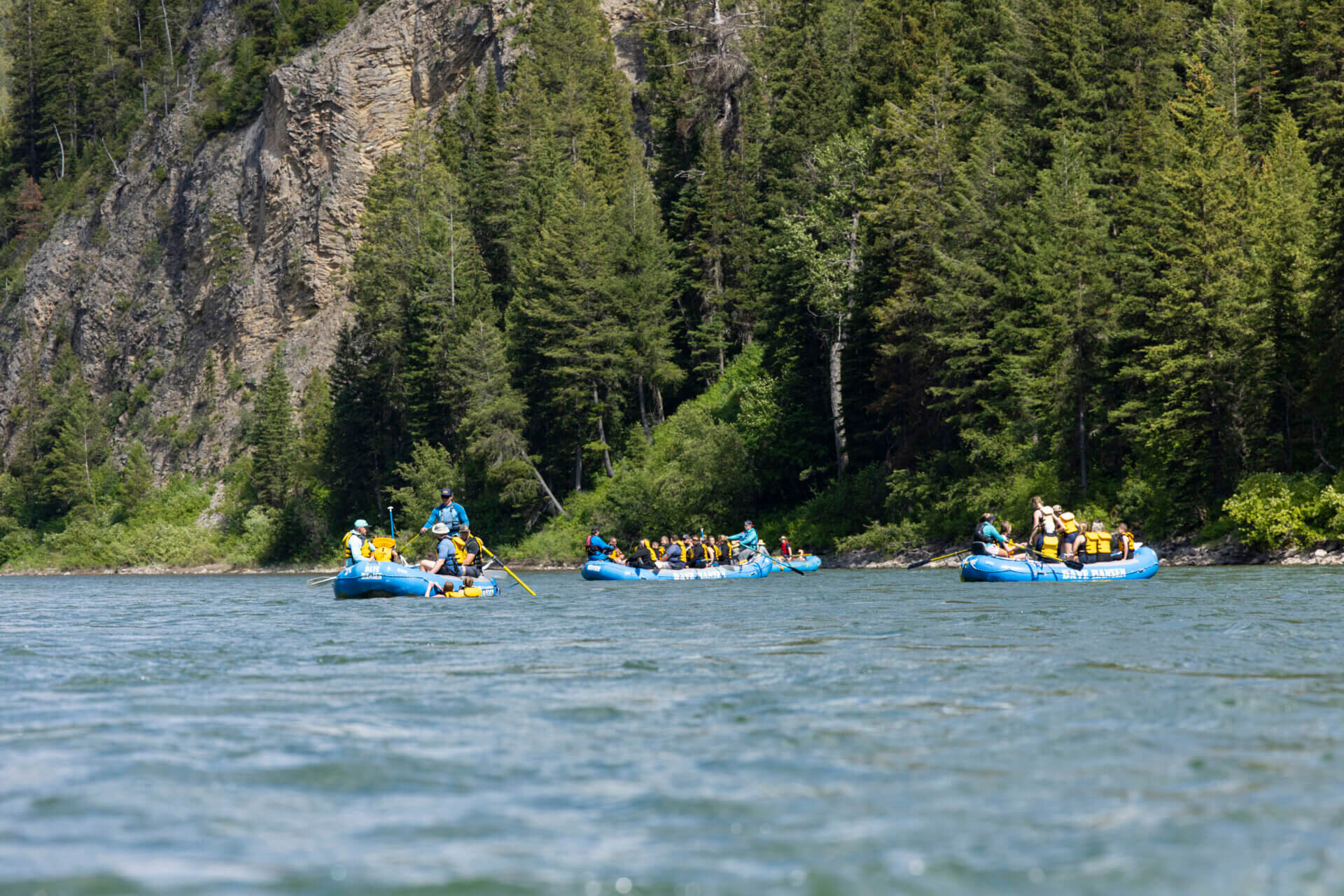
Are our trips safe? This is the most common question we get! With any outdoor activity, whether it be horseback rides, ATV excursions, hikes, etc, there will be an inherent risk that we all share together. Nature is unpredictable! However, the danger isn’t so much in rafts flipping, falling out, or hitting a rock. The danger is not knowing what to do when they do happen, and that is where the experience of our guides, our operation, and our nearly 60-year history of navigating this beautiful stretch of the Snake River come in.
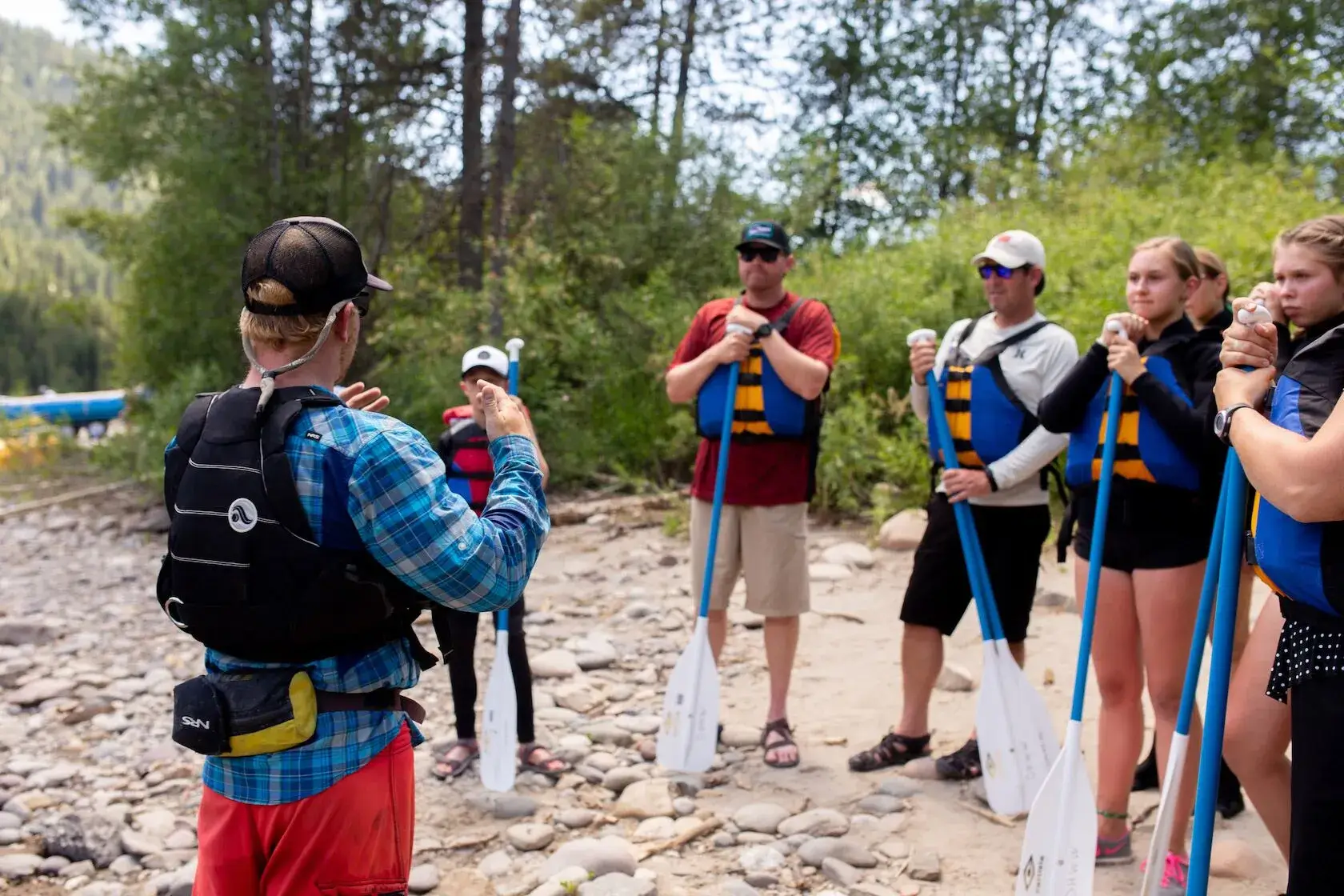
Along with great memories and thoroughly soaked river hair, one of our goals is to give you and your crew a great river education on your trip, which includes an initial safety briefing as soon as you get on the water. During this talk, your guide will teach you how to sit in the raft, how to keep yourself in the boat, how to paddle, what to do if you happen to fall or jump in the river, how to get people back into the raft, what to do if the raft flips, how to work together to get the boat upright if it does turn over. Ultimately, we don’t just want you to feel safe––we want you to feel confident and ready for any adventures ahead!
The most common follow-up we get after the initial safety question is if people fall out of the raft. And the answer is…absolutely! But here’s the secret: falling in is usually less of a dramatic survival story and more of an unexpected, refreshing swim. Out of every 100 people we take down, maybe 5 will fall out in our normal water levels. If you do happen to fall out, there is no need to panic. Typically, you pop up right next to the boat and can grab on until someone pulls you back in. Everyone wears a class V life jacket designed to keep your head above the level of water no matter the rapids. Our river is also what we call a “pool and drop” river, which means that after every section of rapids, there is a calm section before we hit our next section of waves. So, typically we’ll be floating right into the calm section if you do fall in, where it’s easy to pull you back in, have a laugh, and continue on with the trip.
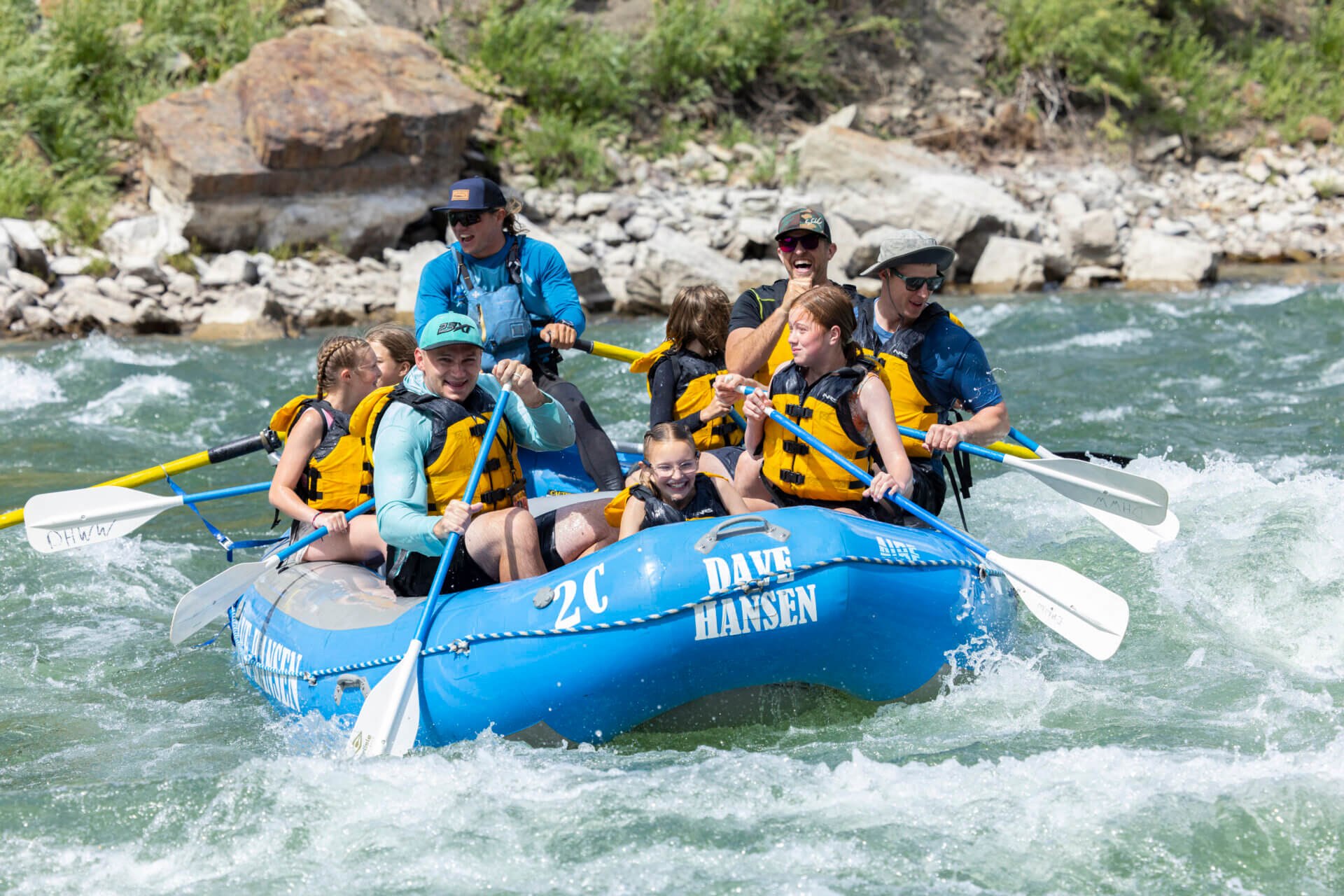
And then…theres most infamous concern: the probability of a boat flipping. Boats absolutely flip, but it’s usually pretty rare for a raft to flip during most of our season. During our normal water levels (usually 8,000 cfs or lower), we might have 1 or 2 out of every 1,000 rafts turn over. During our high water season in the spring (above 16,000 cfs), we might have 3 or 4 rafts flip for every 100 rafts we take down. We don’t always reach those levels every season, it depends on the winter snowmelt and spring runoff, but when it does it’ll be in late May and early June. During those times we’ll take extra precautions to ensure our trips are as safe as possible. This includes raising our minimum age, requiring helmets, having safety kayaks float alongside our trips, and more.
So, will you get wet? Absolutely. Might you take an unexpected swim? Maybe! But will you be prepared, confident, and having the time of your life? Without a doubt. Our team loves this river, but we respect it even more. Outdoor adventure is all about being prepared to embrace a little bit of the unknown, and we’ve spent years perfecting the art of doing it safely. Pack your sunscreen, bring a dry change of clothes, and get ready for an unforgettable day on the river!